Industrial Utility Efficiency

Technology

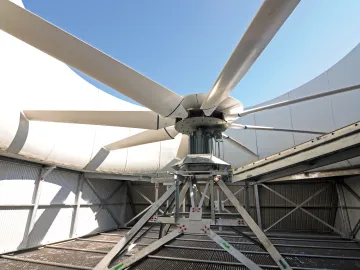
Across industries, operators are adopting cooling tower direct drive (CTDD) motor technology. In particular, permanent magnet (PM) direct drive motors are delivering measurable improvements in efficiency, cleanliness and maintenance reduction. The change is more than a component swap; it represents a new approach to cooling tower design that reduces operating costs, supports environmental goals and improves reliability. 

This article examines how a natural refrigerant–based chiller was engineered to meet process cooling demands while minimizing environmental impact. It explores refrigerant selection tradeoffs, system architecture modifications required for flammable refrigerants and key design strategies such as charge reduction, mechanical isolation and safety controls. Engineers will gain practical insight into balancing efficiency, compliance and operational reliability in next-generation cooling systems.
Optimizing chiller lift is critical for improving energy efficiency, enabling heat recovery and meeting higher-temperature heat rejection demands in modern facilities. This article explain how advanced centrifugal compressor designs, variable speed drives and variable geometry diffusers enhance lift control while reducing power consumption. As heat pump applications and water constraints drive demand for higher lift performance, next-generation chiller technologies are redefining efficiency across commercial and industrial cooling systems.
Adiabatic coolers are rapidly gaining ground in plastics processing as manufacturers seek sustainable, energy-efficient alternatives to traditional cooling towers. By operating in dry, adiabatic and free-cooling modes, modern systems engineered by Frigel North America deliver up to 90% water savings, lower energy consumption and improved temperature stability for injection molding, PET, extrusion and thermoforming applications. With reduced maintenance, closed-loop protection and long-term ROI advantages, adiabatic cooling is emerging as the new benchmark for high-performance industrial process cooling.
Industrial manufacturers are preparing for the EPA’s 2026 mandate requiring all process cooling systems above –22°F to use refrigerants with a GWP of 700 or lower—a shift echoed by more than a dozen states and driven by global HFC phase-down commitments. This article examines the technical, regulatory and operational challenges of adopting low-GWP refrigerants, including flammability classifications, system redesign requirements, efficiency tradeoffs and the long-term implications for chiller manufacturers and end users.
Advancements in heat pump chiller technology now enable efficient recovery of low-grade waste heat, expanding applicability beyond the temperature limitations of traditional absorption systems. When integrated with AI-driven CUP optimization platforms, these systems enhance thermal efficiency, stabilize process loads, and improve overall plant performance.
The event gathered a record number of cooling system providers exhibit, a fact appreciated by the many cooling reps in attendance. “It’s been beneficial,” said Spencer Kaufman, Sales Engineer, Midwest Machinery. “There are decision-makers and people here who do a lot of design work, not only in our market but all across the country. The conversations we’ve been having have been very deep – often up to 15 minutes. The quality of the conversations has been really good.”  

Chillers

This article will make plants aware of the energy and water use differential between CHW systems

Cooling Towers

Bayer Crop Science runs a 240-acre fertilizer production facility with areas for active ingredient

Fluid Coolers

This article explores how air-cooled heat rejection systems are reshaping industrial cooling

Dry Coolers

Adiabatic coolers are rapidly gaining ground in plastics processing as manufacturers seek

Water Filtration

Field-erected evaporative “wet” cooling towers, combined with heat exchangers, are an economical and

Heat Exchangers

Free cooling offers a highly efficient alternative to chiller-based cooling, but its success depends

Cooling Controls

The customers wanted to be able to monitor their system from a control room. They wanted to be able